



How to Blend Your Home and Garden Seamlessly: Design Ideas for Indoor-Outdoor Living
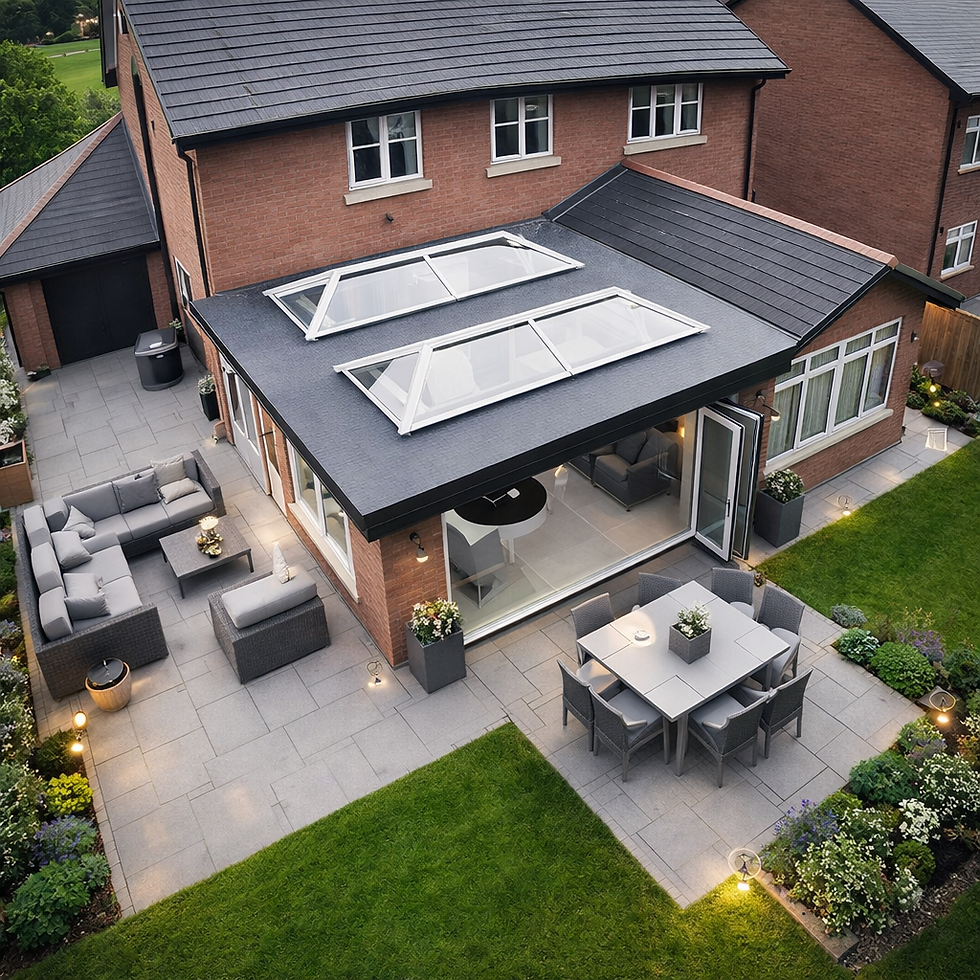
Ask most UK homeowners to describe their dream property and a garden features near the top of the list. You do not need to move to enjoy yours more: with the right doors and a few considered choices, your house and garden can flow together as one space.
Below, our team shares the indoor outdoor living ideas we return to again and again, from doors and thresholds to flooring, colour and planting.
Why indoor-outdoor living matters
Research by Origin found that 80% of homeowners would like their forever home to be surrounded by garden, and 65% would love a property with a patio. Over half said their favourite room is the one with the best view.
People want to see and use their outdoor space, not just glimpse it through a small window. Designing for a seamless home and garden transition lets you enjoy the garden all year, even on days when the doors stay closed.
Indoor outdoor living ideas start with the right doors
Doors are the bridge between inside and out, so they make the biggest difference.
Bifold doors
Bifolds fold back in sections to open almost an entire wall, ideal if you want the boundary to disappear on warm days. Choose a traffic door, a single panel for everyday use, so you do not need to fold the whole set just to pop outside.
Sliding doors
Sliding doors use fewer, larger panels, so you get more glass and less frame when they are closed. They suit homes where the view matters most.
Corner doors
Corner doors open two sides of a room at once, removing the corner post. They work particularly well in kitchen extensions and garden rooms.
Whichever you choose, aluminium makes big openings possible. Origin's aluminium weighs 67% less than steel, so frames stay slim while holding large panes, giving more glass and more daylight. You can explore our aluminium doors and windows to compare styles.
Keep the floor as level as you can
Steps interrupt the flow and can be awkward for young children, older relatives and wheelchair users. Planning levels early costs far less at design stage than fixing them later.
Work with your builder so the patio sits just below the internal floor, with drainage in front of the doors. If you are looking at level threshold patio doors, know the trade-offs:
A weathered threshold has a small lip for the seals to press against. Recessed, the upstand can be only around 14mm, with good weather protection.
A flush threshold gives a completely flat floor, but weather performance cannot be guaranteed, so it is best kept for sheltered or internal openings.
Our guide to bifold door thresholds and drainage options explains each choice in more detail.
Match your flooring, colours and planting
Flooring
When indoor and outdoor floors share the same tone, size and direction, the eye reads them as one surface. Many porcelain ranges come in matching internal and external versions, with a textured finish outside for grip. Lay tiles in the same direction on both sides of the doors, and ask your builder to confirm falls away from the house.
Colour
Powder-coated aluminium comes in hundreds of colours, and dual-colour frames let you choose one shade inside and another outside to suit brickwork or garden furniture. Picking up a colour from your pots or cushions ties the spaces together. Our article on black industrial-style aluminium windows shows how frame colour can shape a whole home.
Planting
Repeating plants on both sides of the glass creates instant continuity. Geraniums, rosemary, thyme, hibiscus and myrtle can all be happy indoors and out, and a potted olive or bay tree just inside the doors makes a striking focal point.
Create a 'third space' for entertaining
The area just outside your doors can become a third space: part house, part garden. To make it work across more of the year:
Add shelter, such as a pergola or awning, so you can sit out in light rain.
Plan outdoor lighting that complements your interior lighting, so the view stays alive after dark.
Choose outdoor furniture in a similar palette to your indoor pieces.
Frequently asked questions
How do I make my house flow into the garden?
Start with large glazed doors, then keep floor levels as close as possible and use matching flooring inside and out. Repeating colours and plants on both sides of the glass finishes the effect.
Are bifold or sliding doors better for indoor-outdoor living?
Bifold doors open almost the whole width, ideal if you want the wall to disappear in summer. Sliding doors give larger glass panels and slimmer frames, so they often suit homes where the view matters all year.
Can you get patio doors with no step?
Yes, a flush threshold gives a completely level floor, although weather performance cannot be guaranteed, so it suits sheltered openings best. For most gardens, a recessed weathered threshold with an upstand of around 14mm is the better balance.
Create your own indoor-outdoor space
If these indoor outdoor living ideas have sparked plans of your own, we would love to help. Our team will help you choose the doors, threshold and finish that bring your home and garden together.
Book a free consultation to start planning your project with us.


Comments