



Windows for Berkshire Homes: A Guide by House Type
The right windows for your home depend more on when and how it was built than on anything else. Berkshire runs from Reading's patterned-brick Victorian terraces and Windsor's Regency villas to Maidenhead's riverside houses, Slough's post-war estates and the new town of Bracknell.
This guide sets out the main types of home across Berkshire, where each is most common, and the windows and doors that suit it best. It also covers the planning rules in each council area, and the North Wessex Downs National Landscape.
Aliluxe designs, supplies and installs aluminium, uPVC and timber windows and doors across Berkshire, including Reading, Slough, Bracknell, Maidenhead, Wokingham, Newbury and Windsor. Every recommendation here comes from what we see on surveys.
Medieval and Georgian towns
Berkshire's old market towns have timber-framed houses and Georgian brick fronts, and Windsor and Eton have Georgian and Regency streets close to the castle.
Where you'll find them
Newbury: one house on Argyle Road is tree-ring dated to 1436, and the town has almshouses from the 16th and 17th centuries. The Kennet Navigation opened in 1723.
Wokingham: a market town since 1219, with cottages on Rose Street dating back to the 14th and 15th centuries, jettied 17th-century cottages on Peach Street and Georgian houses on Broad Street.
Windsor and Eton: late 18th- and early 19th-century buildings on Windsor's Thames Street, and an early 19th-century High Street in Eton.
Hungerford and Cookham: late 18th-century brick town houses such as 34 High Street, Hungerford, and 17th- and 18th-century buildings in Cookham village.
What the windows are usually like
Painted timber sliding sashes with glazing bars, often recessed, on Georgian fronts.
Simple timber side-opening casements on earlier buildings, such as in Eton.
Local red brick and clay tile.
What we recommend
Listed buildings need listed building consent for almost any window replacement or alteration. Timber is usually expected, and secondary glazing is often the most practical upgrade.
Sliding sash windows suit Georgian fronts: timber where the council expects it, and REHAU uPVC sliding sash windows elsewhere.
In Newbury town centre, the council asks for like-for-like materials and prefers slim-profile double glazing to standard units.
On older cottages, timber or flush casement windows are the closest match.
Regency and Victorian Reading and Windsor
Reading grew fast in the late 19th century, when its western suburbs were laid out and many of its people worked for the railways and the Huntley & Palmers biscuit factory, and it is known for its own red, grey and patterned brick.
Where you'll find them
Reading: Eldon Square's houses went up over 40 years from about 1835, Redlands has houses from the 1850s, and Alexandra Road was built in the last quarter of the 19th century, and South Park from the 1840s to the 1900s. Caversham, home to 33,000 people, joined the borough in 1911.
Windsor: Clarence Crescent's stucco villas were built in 1828–32, Adelaide Square in 1830–45, and the terraces on Grove Road in about 1830–40. Prince Consort Cottages of 1855 were one of the earliest model housing schemes.
Slough: Sussex Place villas date from around 1830, and Upton Park was laid out as a planned estate in the 1840s, on land bought in 1842 by James Thomas Bedborough, the builder of Clarence Crescent in Windsor.
Wokingham: the Victorian villas and artisan terraces of Langborough Road, many of which kept their original windows and doors when the council studied them in the late 1990s.
What the windows are usually like
Timber sliding sashes: six-over-six on earlier houses and two-over-two on later ones in Windsor, and nine- and 12-pane sashes in Reading's Redlands.
Bay windows, tripartite sashes and curved bays in Windsor, and coloured leaded lights in the upper panes of some South Park houses in Reading.
Mullioned and transomed casements, some leaded, on the Upton Park villas in Slough.
What we recommend
Sliding sash windows keep the original look: REHAU uPVC sliding sash windows, or timber where the council requires it.
For bays, keep the sash style across all faces, or use REHAU bay windows.
In Reading, check first if your terrace has an Article 4 direction protecting its brickwork (see below).
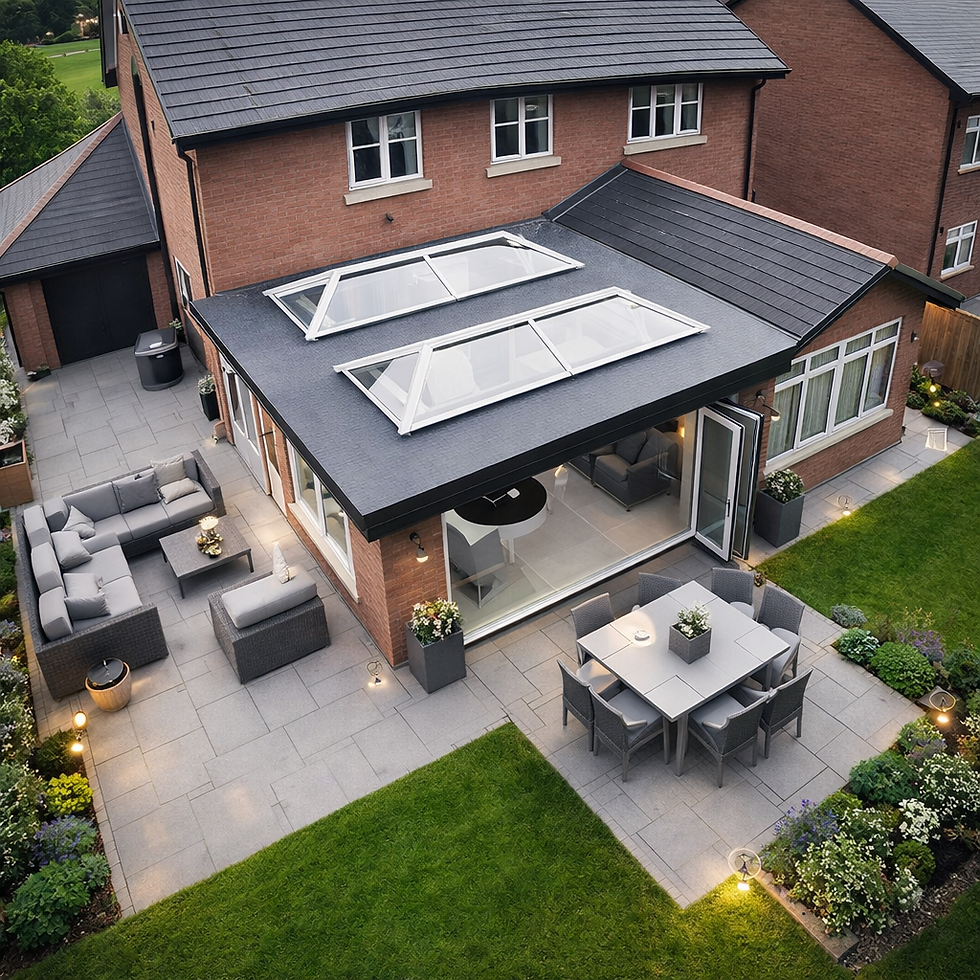
At the back, a kitchen extension with aluminium bi-fold or sliding doors is the most common upgrade we fit.
Victorian and Edwardian riverside and railway suburbs
Brunel's railway bridge at Maidenhead opened in 1839, and pleasure boating on the Thames brought a wave of late Victorian and Edwardian houses along the river.
Where you'll find them
Maidenhead: Victorian and Edwardian riverside villas around Boulters Lock and Ray Mead Road, often Arts and Crafts or Jacobean revival in style, and Victorian and Edwardian fronts on the High Street.
Crowthorne and Sandhurst: Crowthorne grew up around Wellington College (1859) and its station (1860), and Sandhurst around the Royal Military College, which moved there from Great Marlow in 1812, with small Victorian houses on Yorktown Road.
Twyford and Newbury: Victorian cottages by Twyford station, and red and grey brick terraces on Craven Road and 19th-century terraces on Park Terrace in Newbury.
Wokingham: the Murdoch Road area, developed by the People's Investment Company, founded in 1888 by the architect Joseph Morris, who had links to the Arts and Crafts movement.
What the windows are usually like
Timber casements with decorative pane divisions and leaded lights on Maidenhead's riverside villas.
White-painted timber sashes on Newbury's Victorian streets.
Applied timber framing and carved gables.
What we recommend
Casement windows with the original pane pattern suit the Arts and Crafts villas: REHAU uPVC casement windows, or Origin OW-80 aluminium for a slimmer, flush finish.
Sliding sashes for the Victorian terraces: REHAU uPVC sliding sash windows, or timber where required.
Leaded designs can be recreated with external lead or glazing bars on modern double glazing.
Front doors: a panelled REHAU front door with a period glazing pattern.
Interwar, post-war and new-town homes
Slough's trading estate grew in the 1920s and drew people from across the country, and after the war Bracknell was designated a new town on 17 June 1949.
Where you'll find them
Slough: post-war estates at Britwell and Langley, built to rehouse Londoners. Britwell's first tenants moved in in 1956 to 'roomy and modern' houses with large swivel windows.
Bracknell: neighbourhoods such as Priestwood, where the first residents moved in on Christmas Eve 1951, Easthampstead, Bullbrook and Harmans Water, and 1960s estates of detached houses with white-framed windows.
Reading and Woodley: Reading's 1,000th council house was handed over in Tilehurst in 1950, and the council bought 150 acres beside the Bath Road for its Southcote estate, where houses were going up by 1953. Woodley grew around Reading Aerodrome from 1929.
Sandhurst and the suburbs: Greenways in Sandhurst is a 1930s estate of detached red-brick houses, and Long Down a 1960s estate, with interwar and post-war suburbs around Earley, Maidenhead and Newbury.
What the windows are usually like
Large white-framed casements and some metal windows on 1950s houses, and pivot windows on some post-war estates such as Britwell.
Timber or steel casements on interwar houses.
First-generation uPVC from the 1980s and 1990s, now reaching the end of its life. Even Bracknell's Point Royal tower (1961–64) had lost its original timber sashes to uPVC by the time it was listed in 1998.
What we recommend
Casement windows are the natural choice: REHAU uPVC casement windows or Origin OW-80 aluminium.
Flats and upper floors: tilt and turn windows clean easily from inside, and Origin OW-70 slimline gives more glass.
At the back, sliding doors or bi-folds open up a post-war living room to the garden.
In Easthampstead's conservation area, keep the proportions of the original 1950s casements.
Conservation areas, Article 4 and the North Wessex Downs in Berkshire
Before you choose windows, check whether your home is listed, whether it is in a conservation area and whether an Article 4 direction applies.
Most houses, including houses in conservation areas without an Article 4 direction, can usually replace windows without planning permission, as long as the new ones are similar in appearance to the old (Planning Portal).
Flats and maisonettes don't have the same permitted development rights as houses. Identical, like-for-like windows usually don't need permission, but windows that look different may, and if you're a leaseholder you may also need consent from your landlord, freeholder or management company (Planning Portal).
Listed buildings need listed building consent for any significant works, inside or out, including windows (Planning Portal).
An Article 4 direction removes particular permitted development rights, so if it covers windows, even a like-for-like replacement can need an application. We found no direction in Berkshire that names windows, but some still catch them: Reading's brickwork directions remove all permitted development rights, Bray's covers changes to the fronts of some houses, and Windsor town centre's controls colour. Councils' design guidance also matters if you need permission.
The North Wessex Downs National Landscape (formerly an AONB) covers nearly three quarters of West Berkshire (West Berkshire Council), so check whether your address is inside it. Being in it doesn't on its own stop you replacing windows like for like, but some other permitted development rights are tighter there (Planning Portal).
Reading: 18 Article 4 directions. Fifteen protect patterned brickwork or architectural features on named Victorian terraces, such as Brisbane Road and Wantage Road, and remove all permitted development rights, so replacement windows that change how the house looks need planning permission there, so check whether your terrace is one (Reading Borough Council). The council's guidance says new or replacement windows in conservation areas need planning permission unless the materials are similar to the existing (Reading Borough Council).
Slough: five conservation areas and no Article 4 directions that we found. The council's 2026 draft appraisals, still under consideration after consultation, say painted timber windows are appropriate and uPVC and aluminium are not, and the Sussex Place/Clifton Road draft says replacement windows in flats will need planning permission (Slough Borough Council).
Windsor and Maidenhead: 27 conservation areas. In Windsor town centre, an Article 4 direction in force since 1972 means any change of external colour needs the council's consent, including window frames, and white is the traditional colour for window joinery there, and the council's policy is to require traditional materials for windows (Windsor town centre appraisal). Bray also has a direction covering minor development to the fronts of some houses, and the council has used it to take enforcement action against uPVC replacement windows.
West Berkshire: 53 conservation areas. Newbury's town centre appraisal (2024) advises like-for-like replacement windows, prefers slim-profile double glazing to standard units, and says double glazing and uPVC will not normally be accepted in listed buildings (West Berkshire Council).
Bracknell Forest and Wokingham: we found no Article 4 directions covering windows. Crowthorne's appraisal calls the loss of traditional windows highly detrimental (Bracknell Forest Council).
Work done without the right consent can lead to enforcement and the windows being replaced at your cost. We check these rules for every survey, and can help with the application if one is needed.
Berkshire towns at a glance
Town | Population (2021) | Typical housing | Windows that often suit |
|---|---|---|---|
Reading | 203,808 | Victorian patterned-brick terraces and villas, post-war estates | Sash; check brick Article 4s |
Slough | 166,877 | Victorian Upton Park, 1920s growth, post-war Britwell and Langley | Casements; timber in conservation areas |
Bracknell | 78,660 | Post-war new town, 1960s estates | Casements, tilt and turn for flats |
Maidenhead | 67,374 | Victorian and Edwardian riverside villas, suburbs | Leaded casements on villas, sash on terraces |
Wokingham | 50,320 | Medieval town centre, Victorian Langborough Road | Sash, casements on older cottages |
Newbury | 42,265 | Georgian and Victorian town centre | White-painted sash; slim double glazing |
Caversham | 33,042 | Victorian and Edwardian suburbs | Sash, casements |
Windsor | 31,563 | Georgian and Regency town, Victorian villas | Timber sash; white frames in the town centre |
Woodley | 28,027 | Mid-20th-century estates | Casements |
Ascot and Sandhurst | 23,989 and 20,222 | Villas in a woodland setting, Victorian and 1930s Sandhurst | Casements, sash on Victorian houses |
Frequently asked questions
Can I fit uPVC windows in a Berkshire conservation area?
Sometimes. In most of Berkshire, a house in a conservation area can replace its windows without planning permission if the new ones are similar in appearance to the old, but swapping timber for uPVC may not count as similar, so check first. Flats, listed buildings and houses covered by an Article 4 direction usually need permission. In Reading, 15 terraces have Article 4 directions that remove all permitted development rights. Where permission is needed, councils often favour painted timber, and Slough's draft appraisals call uPVC and aluminium inappropriate. We check the rules for your street at survey.
Do I need permission to change my window colour in Windsor?
In Windsor town centre, yes: an Article 4 direction means any change of external colour needs the council's consent, and that includes painting window frames. White is the traditional colour for window joinery there, and the council's policy is to require traditional materials for windows.
What windows suit a Bracknell or Slough post-war house?
Casements or tilt and turn windows in uPVC or aluminium, keeping the original pane layout. Most post-war houses can have their windows replaced without planning permission, as long as the new ones look similar to the old and the house isn't listed or covered by an Article 4 direction. Flats have fewer rights, so check before changing their look.
Do I need permission to replace windows in a flat?
Often. Identical, like-for-like replacements usually don't need planning permission, but windows that look different may, and rules vary by council. If you're a leaseholder, check your lease, as you may also need the freeholder's or management company's consent.
Do you cover my part of Berkshire?
Yes. We work across Berkshire, including Reading, Slough, Bracknell, Maidenhead, Wokingham, Newbury, Caversham, Windsor, Woodley, Thatcham, Ascot and Sandhurst.
More window guides
We have guides like this for Surrey, Kent, Hertfordshire, Hampshire, Sussex and Buckinghamshire, and for Central, North, South, East and West London.
Get a free survey
Tell us about your home and we'll recommend the windows that suit it, check whether it is listed, in a conservation area or covered by an Article 4 direction, and give you a fixed quote. Call 020 4581 8351, email sales@aliluxe.co.uk or request a quote online. You can also browse our uPVC windows and doors and aluminium windows.
Please note: This guide is for general information only and is not planning, legal or professional advice. Planning rules, Article 4 directions and council guidance change over time, and how they apply depends on your property, so always check with your local planning authority before you start work (and with your landlord, freeholder or management company if you're a leaseholder). Replacement windows and doors must also meet Building Regulations. Historical and local details come from council, Historic England and other published sources and were believed to be correct when this guide was written in October 2026. Aliluxe cannot accept responsibility for decisions made solely on the basis of this guide, and we'll confirm the rules that apply to your home at survey.


Comments