



Windows for West London Homes: A Guide by House Type
The right windows for your home depend more on when and how it was built than on anything else. West London has some of the most varied housing in the capital: stucco Victorian terraces in Fulham, Bedford Park (often called the first garden suburb), Arts and Crafts cottages in Brentham, and mile after mile of 1930s Metroland semis in Harrow, Wembley and Ruislip.
This guide sets out the main types of home in Brent, Ealing, Hammersmith and Fulham, Harrow, Hillingdon and Hounslow, where each is most common, and the windows and doors that suit it best. It also covers the conservation area and Article 4 rules that apply in each borough.
Aliluxe designs, supplies and installs aluminium, uPVC and timber windows and doors across London. Every recommendation here comes from what we see on surveys.
Victorian and Edwardian terraces
West London's terraces followed the railways and the Underground out from the centre between about 1860 and 1914.
Where you'll find them
Willesden and Kilburn: Willesden's population rose from 18,500 in 1875 to 140,000 in 1906, as land companies laid out streets of terraced houses around the new stations.
Queen's Park: two- and three-storey terraces and semis built from about 1895 to 1905, with bays common.
Ealing: grew fast after building began north of the railway in 1864, and six times as many houses were finished in 1878 as in 1876.
Barons Court and Fulham: grand stucco terraces east of Vereker Road, plainer red-brick terraces to the west, and streets such as Fulham Park Gardens from the late 19th century.
Chiswick and Hounslow: Grove Park from 1871, the Glebe estate's uniform terraces, and Victorian streets in central Hounslow that followed the District Railway in the 1880s.
What the windows are usually like
Timber sliding sash windows, often with the original sashes still in place in stucco terraces such as Barons Court.
Canted bay windows, sometimes rising through two storeys.
First-floor French doors onto small balconies in the grander stucco houses.
What we recommend
Sliding sash windows keep the original look. REHAU uPVC sliding sash windows give the traditional proportions with modern insulation, and timber sash is the choice where the council requires it.
For bays, match the sash style across all faces, or use REHAU bay windows where the bay already has casements.
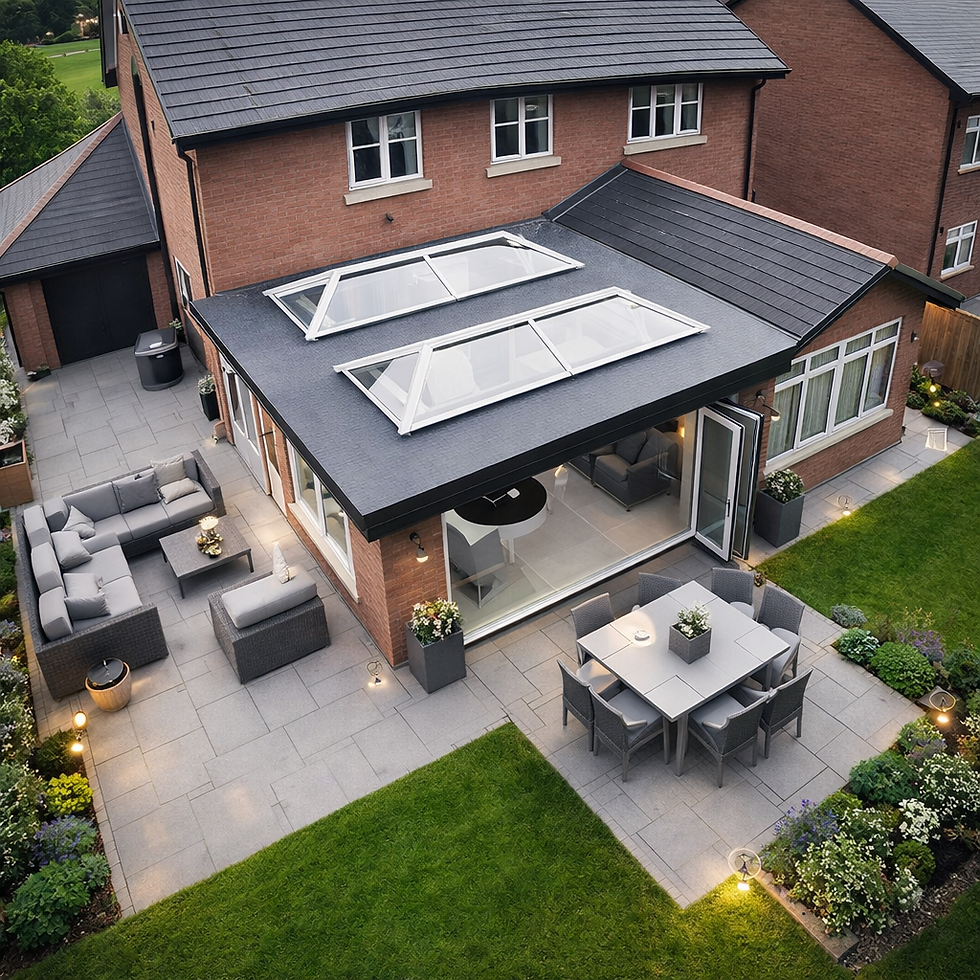
At the back, a kitchen extension with aluminium bi-fold or sliding doors is the most common upgrade we fit on these houses.
Front doors: a panelled REHAU front door with a period-style glazing pattern.
Garden suburbs and Arts and Crafts homes
West London is where the garden suburb began. These estates are among the most tightly protected in London, so check the rules before you choose.
Where you'll find them
Bedford Park, Chiswick: Jonathan Carr bought the land in 1875, and by 1883 there were 490 houses, many by Richard Norman Shaw, in the Queen Anne Revival style.
Brentham Garden Suburb, Ealing: started by the co-operative Ealing Tenants Ltd in 1901, with the last of 700 planned Arts and Crafts houses finished in 1914 to 1915.
Old Oak Estate, East Acton: a London County Council cottage estate built in 1912–13 and 1920–23.
Roe Green Village, Kingsbury: a garden village designed in 1916 and finished in 1920 for aircraft workers, and Brent's first conservation area.
What the windows are usually like
Timber casements or sashes with small panes and glazing bars, usually painted white.
White-painted bay windows and tile-hung gables at Bedford Park.
Dormers and cottage-style casements at Roe Green and Old Oak.
What we recommend
Expect to need permission. Bedford Park, Brentham, Old Oak and Roe Green all have Article 4 directions covering windows (see below).
Timber is usually expected on front elevations. Brent's 2018 design guide for Roe Green accepts uPVC only if it copies the original timber casements exactly, and Hammersmith & Fulham says uPVC and aluminium are unlikely to be approved at Old Oak, except possibly at the rear.
Copy the original exactly: the same opening pattern, glazing-bar layout and frame depth. Slim double glazing or secondary glazing can work where the council accepts it.
At the rear, where rules allow, French doors or slim sliding doors in a heritage colour.
1920s and 1930s Metroland semis
The Metropolitan line and the new arterial roads turned the fields of north-west Middlesex into suburbs. In Harrow, almost two-thirds of all homes date from between the wars.
Where you'll find them
Rayners Lane and Harrow Garden Village: 'classic Metroland' built around the station from 1929 to 1938.
Wembley, Sudbury and Kingsbury: Sudbury Court had 1,700 houses built in 1928–34, and Kingsbury was building over 1,000 houses a year in 1931–33.
Ruislip Manor and Eastcote: George Ball's 'Manor Homes' estate went up in 1933–39, and the Eastcote Park Estate was built by Comben & Wakeling in the 1930s.
Hanger Hill, Ealing: the Haymills estate, built mainly in 1928–30, mixes traditional and Moderne houses, with timber casements and metal Crittall windows.
Gunnersbury Park Estate, Hounslow: a formally laid-out estate of half-timbered semis and short terraces from 1926–31.
What the windows are usually like
Timber casements with leaded lights, often in a two-storey bay, as at Barn Hill in Wembley.
Steel Crittall windows, around Rayners Lane and on Moderne houses such as those at Hanger Hill, some with curved metal frames.
A recessed porch with a front door with a single glazed panel, sometimes with a stained-glass motif.
What we recommend
Casement windows suit these houses best. REHAU uPVC casement windows are good value, and Origin OW-80 aluminium gives a slimmer, flush finish.
Where the originals were steel, heritage steel-look windows recreate the thin Crittall sightlines with modern performance.
For the bay, REHAU bay and bow windows keep the original shape. Ask about a structural check, as many 1930s bays have no proper lintel.
Leaded or Georgian-bar patterns should be fixed to the outside of the glass, not sandwiched between the panes. Brent's Barn Hill guide asks for exactly this.
Historic villages and period cottages
Before the suburbs arrived, West London was a string of Middlesex villages, and many of their old centres survive as conservation areas.
Where you'll find them
Pinner: Waxwell Lane mixes 16th and 17th century timber-framed cottages, early Victorian cottages with recessed sashes and Arts and Crafts houses.
Hillingdon's villages: Harefield, Harmondsworth, Ickenham, Longford, Eastcote and Ruislip villages have all been conservation areas since 1969–70.
Harrow on the Hill: the hilltop village around Harrow School, with several conservation areas covered by Article 4 directions.
What the windows are usually like
Small-paned timber casements in cottages, often with leaded lights.
Georgian and early Victorian sashes set back in the brickwork.
Windows that are not always square, in walls that have moved over the centuries.
What we recommend
Listed buildings need listed building consent for any window change. Timber is usually expected, and secondary glazing is often the most practical upgrade.
In conservation areas, timber or flush sash windows are the closest match to old casements. Harrow's Waxwell Lane appraisal specifically criticises bulky uPVC that ignores the original glazing pattern.
Every opening is measured individually, so frames fit walls that are out of square.
Mansion blocks, estates and modern flats
A large share of West Londoners live in flats, from Edwardian mansion blocks to interwar council estates and new riverside developments.
Where you'll find them
Mansion blocks: for example on Palliser Road, Barons Court, built by 1916.
Philanthropic and council estates: Peabody's Fulham estate on Lillie Road opened in 1912 with 239 flats, and the LCC's White City estate was built from the late 1930s.
Moderne flats: Lawns Court in Wembley, 50 flats built in 1932 as six linear blocks.
Post-war and modern: large council estates at Northolt, late interwar and early post-war semis in Hanworth, and new-build flats across the borough centres.
What the windows are usually like
Timber sashes in mansion blocks, often with a fixed pattern set by the freeholder.
Steel or early aluminium windows in interwar and post-war blocks.
First-generation uPVC from the 1980s and 1990s, now reaching the end of its life.
What we recommend
Tilt and turn windows for flats and upper floors, as they clean easily from inside: REHAU tilt and turn.
Slimline aluminium for a modern look with more glass: Origin OW-70.
Mansion flats need the freeholder's consent, and planning permission if the windows will look different. The block may have a set window design. We can work to it.
Balconies and terraces: sliding doors save space where a door can't swing open.
Conservation areas, Article 4 and listed buildings in West London
Before you choose windows, check three things with your council: whether your home is listed, whether it is in a conservation area, and whether an Article 4 direction applies.
Most houses, including houses in conservation areas without an Article 4 direction, can usually replace windows without planning permission, as long as the new ones are similar in appearance to the old (Planning Portal).
Flats and maisonettes don't have the same permitted development rights as houses. Identical, like-for-like windows usually don't need permission, but windows that look different may, and if you're a leaseholder you may also need consent from your landlord, freeholder or management company (Planning Portal).
Listed buildings need listed building consent for any significant works, inside or out, including windows (Planning Portal).
An Article 4 direction removes permitted development rights, so even a like-for-like replacement can need an application. Many London councils use them in conservation areas, and the ones that cover windows are listed below.
Brent: Has 22 conservation areas, and all residential conservation areas are covered by Article 4 Directions. These commonly restrict changes to front windows and doors, meaning planning permission may be required. In Roe Green Village, suitably designed uPVC replacement windows can be acceptable if they replicate the original windows' proportions and detailing. In Barn Hill, proposed uPVC or aluminium windows should be assessed against the conservation area's design guidance and the property's original features (Brent Council).
Ealing: Has 30 conservation areas. Article 4 Directions in Brentham Garden Estate, The Grove, Hanger Hill Garden Estate and Hanger Hill (Haymills) explicitly restrict certain window and door alterations. Bedford Park also has Article 4 Directions, but the specific restrictions should be checked against the relevant direction and property. Ealing Council generally favours retaining and repairing traditional timber or Crittall windows; plastic-looking replacements that fail to match the original materials, proportions and detailing are unlikely to be acceptable (Ealing Council, Ealing Council).
Hammersmith & Fulham: Has 44 conservation areas. The Old Oak and Wormholt Article 4 Direction specifically covers window alterations, including changes to window openings, patterns and materials. The council publishes Article 4 documentation identifying affected properties and restricted works; the applicable direction should be checked for each address, as other directions may cover different alterations (Hammersmith & Fulham Council).
Harrow: Has 30 conservation areas, with Article 4 Directions covering the majority. These directions can restrict window replacements and other external alterations, depending on the location and applicable direction. The Rayners Lane Conservation Area Management Strategy states that replacement features made from non-traditional materials will be resisted and that replacement windows should closely match the original architectural detailing (Harrow Council).
Hillingdon: Has 31 conservation areas. We found no specific Article 4 Directions restricting window replacement in the council's published register, although property-specific planning conditions and listed-building controls may still apply. The borough also has 15 Areas of Special Local Character, where planning policies seek to preserve or enhance local architectural character and appearance.
Hounslow: has 29 conservation areas. Article 4 directions in Bedford Park and Gunnersbury Park require permission for changes to windows, doors and roofs on every property (Hounslow Council).
Work done without the right consent can lead to enforcement and the windows being replaced at your cost. We check these rules for every survey, and can help with the application if one is needed.
West London boroughs at a glance
Borough | Typical housing | Conservation areas | Windows that often suit |
|---|---|---|---|
Brent | Victorian Kilburn and Willesden, Queen's Park, Metroland Wembley and Kingsbury | 22 | Sash in Victorian streets, casements in Metroland, timber in Roe Green |
Ealing | Victorian Ealing, Brentham, Bedford Park, Hanger Hill, interwar suburbs | 30 | Sash, casements, steel-look for Moderne houses |
Hammersmith and Fulham | Victorian stucco and red-brick terraces, mansion blocks, Old Oak, White City | 44 | Sash, tilt and turn for flats |
Harrow | Metroland semis (two-thirds of homes), Pinner and Harrow on the Hill villages | 30 | Casements, steel-look around Rayners Lane |
Hillingdon | Metroland Ruislip and Eastcote, historic villages | 31 | Casements, flush casements in villages |
Hounslow | Bedford Park, Victorian Chiswick and Hounslow, Gunnersbury Park, interwar Osterley and Hanworth | 29 | Sash, casements, check Article 4 in Bedford Park and Gunnersbury |
Frequently asked questions
Can I fit uPVC windows in a West London conservation area?
Sometimes. Each borough is different: Ealing says uPVC is 'not generally acceptable' in its conservation areas, while Brent's Barn Hill design guide will consider uPVC and aluminium if the proportions match the originals. Where an Article 4 direction covers windows, you need planning permission first. We check the rules for your street at survey.
Do I need planning permission for new windows in Bedford Park?
Yes, in most cases. Both Hounslow and Ealing have Article 4 directions in Bedford Park and Hounslow's covers windows, doors and roofs on every property.
What windows suit a 1930s Metroland semi?
Casement windows, with the original bay kept and leaded or Georgian-bar patterns in the top lights if you want the period look. If your house originally had steel Crittall windows, steel-look aluminium is the closest match.
Do I need permission to replace windows in a flat?
Often. Identical, like-for-like replacements usually don't need planning permission, but windows that look different may, and rules vary by council. If you're a leaseholder, check your lease, as you may also need the freeholder's or management company's consent.
Do you cover my part of West London?
Yes. We work across Brent, Ealing, Hammersmith and Fulham, Harrow, Hillingdon and Hounslow, including Wembley, Acton, Chiswick, Fulham, Pinner, Ruislip and Isleworth.
More window guides
We have guides like this for Surrey, Kent, Hertfordshire, Hampshire, Sussex, Buckinghamshire and Berkshire, and for Central, North, South and East London.
Get a free survey
Tell us about your home and we'll recommend the windows that suit it, check whether it is listed, in a conservation area or covered by an Article 4 direction, and give you a fixed quote. Call 020 4581 8351, email sales@aliluxe.co.uk or request a quote online. You can also browse our uPVC windows and doors and aluminium windows.
Please note: This guide is for general information only and is not planning, legal or professional advice. Planning rules, Article 4 directions and council guidance change over time, and how they apply depends on your property, so always check with your local planning authority before you start work (and with your landlord, freeholder or management company if you're a leaseholder). Replacement windows and doors must also meet Building Regulations. Historical and local details come from council, Historic England and other published sources and were believed to be correct when this guide was written in October 2026. Aliluxe cannot accept responsibility for decisions made solely on the basis of this guide, and we'll confirm the rules that apply to your home at survey.


Comments