



Windows for Surrey Homes: A Guide by House Type
Updated: Oct 20
The right windows for your home depend more on when and how it was built than on anything else. Surrey has almost every type of English house within a few miles: medieval and Georgian town centres, Victorian railway towns, 1930s suburbs, Arts and Crafts villas and modern estates.
This guide sets out the main types of housing you'll find across Surrey, where each is most common, and the windows and doors that suit it best. It also covers the planning rules that matter in Surrey's many conservation areas.
Aliluxe designs, supplies and installs aluminium, uPVC and timber windows and doors across Surrey. Every recommendation here comes from what we see on surveys.
Victorian and Edwardian homes
Surrey's Victorian and Edwardian houses grew up around the railway, so you find them in every town with an early station.
Where you'll find them
Woking grew from almost nothing after the railway reached Woking Common in 1838. The new town was laid out around the station from the late 1850s, on land sold off by the Necropolis Company (The Lightbox).
Redhill began as a turnpike settlement and grew quickly after its first station opened in 1841.
Guildford, Dorking, Reigate, Staines-upon-Thames, Caterham and Haslemere all have streets of Victorian terraces and Edwardian villas close to their stations and town centres.
What the windows are usually like
Vertical sliding sash windows, often two-over-two or one-over-one panes.
Canted bay windows on the ground floor, and sometimes the first floor.
Panelled front doors with fanlights or stained glass.
What we recommend
Sliding sash windows keep the original look. REHAU uPVC sliding sash windows give the traditional proportions with modern insulation, and timber sash is the choice where planning requires it.
For bays, match the sash style across all three faces, or use REHAU bay windows where the bay has casements already.
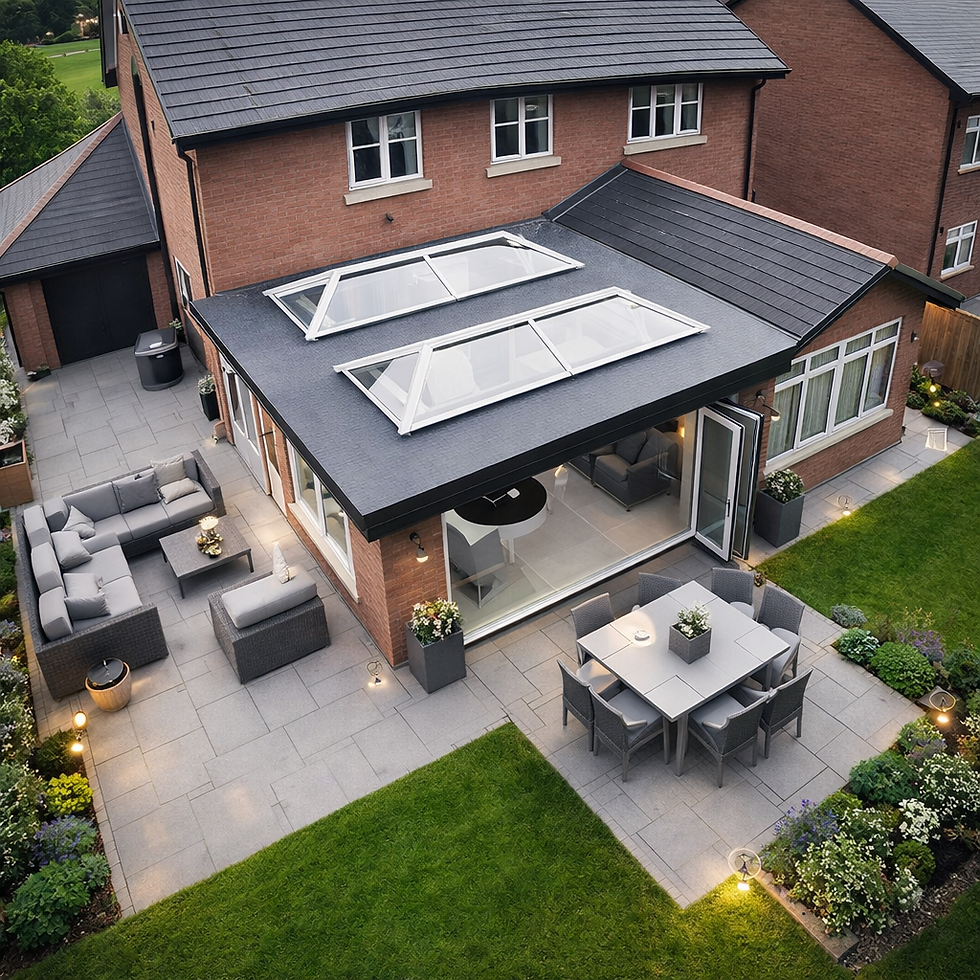
At the back, many owners pair the period front with a modern kitchen extension and aluminium bi-fold or sliding doors to the garden.
Front doors: a panelled REHAU front door with a period-style glazing pattern.
1920s and 1930s semis and detached homes
The interwar years filled north Surrey with semi-detached and detached houses, built as the railways and new roads opened up commuting to London.
Where you'll find them
Stoneleigh, between Epsom and Ewell, is a classic 1930s suburb. Its station opened in 1932 and the first houses went up in 1933, and most homes are semi-detached.
Ewell, Banstead, Walton-on-Thames, Ashford and the outer parts of Guildford and Woking also have large areas of interwar housing.
What the windows are usually like
Casement windows, often with leaded or Georgian-bar top lights.
Two-storey bay windows at the front, sometimes curved or with a tile-hung panel between floors.
A recessed porch with a glazed front door.
What we recommend
Casement windows suit these houses best. REHAU uPVC casement windows are good value, and Origin OW-80 aluminium gives a slimmer, flush finish.
For the bay, REHAU bay and bow windows keep the original shape. Ask about a structural check, as many 1930s bays have no proper lintel.
For the period look, add Georgian bars or a leaded pattern to the top lights only.
At the back, French doors or a wide sliding door open the house to the garden.
Period cottages, Georgian and listed homes
Surrey has more than 6,000 listed buildings and around 200 conservation areas (Surrey County Council), so many older homes come with planning rules on windows.
Where you'll find them
Farnham: most of the town centre was made an Outstanding Conservation Area in 1972, and its old streets are known for their many Georgian buildings, including the wide sweep of Castle Street (Farnham Society).
Old Oxted: a medieval street plan, with buildings on Godstone Road and The Old Bell pub dating from the 15th and 16th centuries.
Godalming, Guildford, Dorking, Reigate and Haslemere have historic high streets with timber-framed, Georgian and early Victorian buildings, many of them listed.
Villages across the Surrey Hills have tile-hung and timber-framed cottages.
What the windows are usually like
Small-paned timber casements in cottages, often with leaded lights.
Georgian six-over-six sash windows with slim glazing bars in town houses.
Windows that sit flush in the frame, and are not always square.
What we recommend
Listed buildings need listed building consent for almost any window replacement or alteration. Timber is usually expected, and secondary glazing is often the most practical upgrade.
In conservation areas, timber or flush sash windows are the closest match to the originals. Check with the council before choosing uPVC (see the planning section below).
For Georgian town houses, sliding sash with slim, correctly proportioned glazing bars.
For cottages, flush casements with a slim profile and traditional hardware.
Arts and Crafts and large detached homes
Surrey was a centre of the Arts and Crafts movement, and its private estates and hill towns are full of large detached houses from about 1880 to 1939.
Where you'll find them
St George's Hill, Weybridge: developer W. G. Tarrant bought the 964-acre site in 1911. Many of its earliest houses were built in the Arts and Crafts style, and the estate now has more than 450 homes.
New Oxted grew around the station after the railway opened in 1884, with Tudor-style buildings and stucco frontages.
Haslemere, Esher, Cobham and the Wentworth Estate near Virginia Water also have many large Edwardian and interwar detached houses.
What the windows are usually like
Timber or steel casements, often grouped in long rows under deep eaves.
Leaded lights and small panes, sometimes in stone or brick mullions.
Large feature windows on stairwells, and garden doors onto terraces.
What we recommend
Steel-look aluminium suits these houses well. Heritage steel-look windows recreate slim steel sightlines with modern performance.
Flush casements in timber or Origin OW-80 aluminium where the originals were timber.
For garden rooms and extensions, large-format sliding doors or bi-folds, in a colour matched to the main house.
Private estates often have their own design rules on top of council planning. Check them before you order.
Post-war and modern homes
Most post-war and modern Surrey homes have no planning restrictions on windows, which makes them the easiest to upgrade and the best fit for contemporary designs.
Where you'll find them
Camberley, Frimley, Leatherhead, Addlestone and Staines-upon-Thames have large areas of 1950s to 1990s estates.
Newer developments in every town, such as the Watercolour development in Redhill, built from 2010 to 2012.
Town-centre flats in Woking, Guildford and Staines.
What the windows are usually like
Large picture windows with top-hung or side-hung openers.
First-generation uPVC or aluminium from the 1980s and 1990s, now reaching the end of its life.
Patio doors or French doors to the garden.
What we recommend
Slimline aluminium for a modern look with more glass: Origin OW-70.
Tilt and turn windows for flats and upper floors, as they are easy to clean from inside: REHAU tilt and turn.
Better value with strong performance: REHAU uPVC casement windows.
For the garden, replace old patio doors with aluminium sliding doors or bi-folds.
Flats don't have the same permitted development rights as houses. Identical, like-for-like windows usually don't need permission, but windows that look different may, and if you're a leaseholder you may also need consent from your landlord, freeholder or management company.
Conservation areas, Article 4 and listed buildings in Surrey
Before you choose windows, check three things with your council: whether your home is listed, whether it is in a conservation area, and whether an Article 4 direction applies.
Most houses, including houses in conservation areas without an Article 4 direction, can usually replace windows without planning permission, as long as the new ones are similar in appearance.
Houses in a conservation area can usually replace like for like, but changing material (timber to uPVC) or style generally needs permission (4D Planning).
An Article 4 direction removes those rights, so even a like-for-like replacement needs an application. In Reigate and Banstead, Article 4 directions cover most conservation areas and include windows (Reigate & Banstead Council). Mole Valley, which includes Dorking and Leatherhead, also uses Article 4 directions in conservation areas (Mole Valley Council).
Listed buildings always need listed building consent for window changes, wherever they are.
Flats and maisonettes don't have permitted development rights for windows, so changes usually need planning permission.
Work done without the right consent can lead to enforcement and the windows being replaced at your cost. We check these rules for every Surrey survey, and can help with the application if one is needed.
Surrey towns at a glance
Town | Typical housing | Windows that often suit |
|---|---|---|
Camberley and Frimley | Post-war and modern estates, some Victorian | Aluminium or uPVC casements, sliding doors |
Caterham | Victorian, interwar | Sash, casements |
Dorking | Historic centre, Victorian, interwar | Timber or flush sash in the centre, casements elsewhere |
Epsom and Ewell | 1930s semis (Stoneleigh), Victorian, historic Ewell village | Casements and bays |
Esher and Cobham | Large Edwardian and interwar detached | Steel-look aluminium, flush casements |
Farnham | Georgian centre (Outstanding Conservation Area) | Timber sash, check planning first |
Godalming | Historic timber-framed and Georgian centre | Timber or flush sash, check planning first |
Guildford | Historic centre, Victorian terraces, interwar suburbs | Sash in older streets, casements in suburbs |
Haslemere | Victorian, Edwardian and Arts and Crafts | Sash, steel-look aluminium |
Leatherhead | Post-war, historic centre | Casements, slimline aluminium |
Oxted | Old Oxted medieval, New Oxted Tudor-style from 1884 | Flush casements, leaded-look top lights |
Redhill and Reigate | Victorian railway town, historic Reigate | Sash, casements, check Article 4 |
Staines-upon-Thames | Victorian terraces, modern flats | Sash, tilt and turn for flats |
Walton-on-Thames and Weybridge | Interwar, Arts and Crafts (St George's Hill) | Casements, steel-look aluminium |
Woking | Victorian and Edwardian, interwar, modern centre | Sash, casements, slimline aluminium |
Frequently asked questions
Can I put uPVC windows in a conservation area in Surrey?
Sometimes. Like-for-like uPVC replacements are often allowed, but swapping timber for uPVC on a front wall usually needs permission, and Article 4 directions can require an application for any change. Check with your council, or ask us to check at survey.
What windows suit a 1930s semi?
Casement windows, with the original bay kept and Georgian bars or a leaded pattern in the top lights if you want the period look.
What windows suit a Victorian terrace?
Sliding sash windows, in timber or uPVC, with the original glazing pattern.
Do I need permission to replace windows in a flat?
Often. Identical, like-for-like replacements usually don't need planning permission, but windows that look different may, and rules vary by council. If you're a leaseholder, check your lease, as you may also need the freeholder's or management company's consent.
Do you cover my part of Surrey?
We work across Surrey, including Guildford, Woking, Epsom, Reigate, Farnham, Dorking, Weybridge and the surrounding towns and villages.
More window guides
We have guides like this for Kent, Hertfordshire, Hampshire, Sussex, Buckinghamshire and Berkshire, and for Central, North, South, East and West London.
Get a free survey
Tell us about your home and we'll recommend the windows that suit it, check any planning rules, and give you a fixed quote. Call 020 4581 8351, email sales@aliluxe.co.uk or request a quote online. You can also browse our uPVC windows and doors and aluminium windows.
Please note: This guide is for general information only and is not planning, legal or professional advice. Planning rules, Article 4 directions and council guidance change over time, and how they apply depends on your property, so always check with your local planning authority before you start work (and with your landlord, freeholder or management company if you're a leaseholder). Replacement windows and doors must also meet Building Regulations. Historical and local details come from council, Historic England and other published sources and were believed to be correct when this guide was written in October 2026. Aliluxe cannot accept responsibility for decisions made solely on the basis of this guide, and we'll confirm the rules that apply to your home at survey.


Comments